 English
 French
 Arabic
 Bulgarian
 Czech
Czech
 Danish
 German
 Greek
Greek
 Spanish
 Finnish
 Hungarian
 Indonesian
 Italian
 Hebrew
 Japanese
 Korean
 Dutch
Dutch
 Polish
 Portuguese, International
 Romanian
 Russian
 Slovak
 Swedish
 Thai
Thai
 Turkish
 Ukrainian
“A people”, in the sense of an ethnic group, is 民族 in Chinese, and the word poses a real translation problem. 民 means ordinary people, as opposed to those who govern; 族 shows a banner above an arrow ⟶ the clan that rallies under the same standard. In its modern sense, the compound came from Japanese at the end of the 19th century, along with a whole political vocabulary. In English, we hesitate between people, ethnic group and nation, and translated official texts often say “nationality”. None of them quite fits (on this page I write “ethnic group”, for want of anything better).
China officially recognises fifty-six ethnic groups: the 汉族 , just over 91% of the population, and fifty-five 少数民族 , literally “ethnic groups in small numbers”. The list was drawn up between the 1950s and 1979, when the Jinuo of Yunnan were the last to be recognised. But the small number is relative: the 壮族 , the country's largest minority, number nearly twenty million, more than many European countries. Many of these peoples have their own language, and some their own script: Mongolian is written from top to bottom, Uyghur in the Arabic alphabet, and the Naxi have kept the 东巴文 pictograms, one of the last scripts of this kind that are still read.
The name of the Han comes from the dynasty of the same name (206 BC to AD 220). That said, not everyone applies it to themselves in the same way: in the South, and above all among the Cantonese who settled overseas, people rather called themselves 唐人 , “people of the Tang”, hence 唐人街 , the Chinatown of our cities. To speak of themselves as a whole, the Chinese also have more lyrical formulas: 炎黄子孙, the descendants of the mythical sovereigns Yandi and Huangdi, or 龙的传人, the descendants of the dragon, the title of a 1978 Taiwanese song that became an unofficial anthem.
The neighbouring peoples, for their part, left their mark on the vocabulary. The Chinese called the nomads of the North and the West 胡 , and whatever came from their lands bore this character: the carrot, 胡萝卜, “the turnip of the Hu”, pepper, 胡椒, the fiddle 胡琴. Some see the same 胡 in 胡说 , “to speak like the barbarians” ⟶ to talk nonsense. I am not certain of it: 胡 also means “any old how”, and the explanation may well have come after the fact.
Now for the languages. Chinese goes by several names, and each one tells you something. 汉语 is the language of the Han, as opposed to Tibetan or Mongolian; 中文 is rather the written language, that of books and lessons; 普通话 , “the common language”, is the spoken standard, based on the pronunciation of Beijing. In Taiwan, people say 国语 , “the national language”, and in Singapore 华语 . Watch out for 韩语 , Korean: only the tone separates it from 汉语 (a classic mistake among beginners, and it always makes the class laugh).
That leaves the question of the 方言 , literally “the speech of the regions”. We translate it as “dialects”, and that is where things get complicated. A Beijinger does not understand a Cantonese person speaking 粤语 : to a European linguist, these are two languages, as far apart as French and Italian, if not further. But they write with the same characters, read the same newspapers, and Chinese tradition treats them as varieties of a single language. Who is right? It all depends on the criterion you choose, and I will not settle the matter here (our page The Languages of China sets out how the country's languages are classified). The proverb, for its part, simply notes: 十里不同音,百里不同俗, ten li away the accent changes, a hundred li away the customs.
For other languages, you add 语 or 文 to the name of the country: 英语 and 英文, 法语 and 法文. In principle, 语 refers to the spoken language and 文 to the written one; in actual use, one is often taken for the other. Usage again. And when a text is incomprehensible, an English speaker says “it's all Greek to me”; a Chinese speaker talks of 天书 , “a book from Heaven”.
Accent, 口音 , gives away where you come from more surely than an identity card. A Beijinger is recognised by his 京腔 , which rolls the 儿 at the end of words; someone who has travelled too much ends up with a 南腔北调 accent, neither northern nor southern. You always keep something of your 乡音 , the accent of your native place: that is the whole subject of He Zhizhang's poem, on our page Return to My Homeland - He Zhizhang, about a man who left young and came back old with his accent intact. Countries and nationalities, for their part, are on the page Names and nationalities.
Our examples end with a sentence from the Analects. Sima Niu was grieving because he had no brothers; Zixia, a disciple of Confucius, answered him 四海之内,皆兄弟也, which Couvreur translates, on our page Chapter 12 of the Analects of Confucius, as “within the four seas, all men are his brothers”. The inhabited world was then believed to be surrounded by four seas, and the expression 五湖四海 still bears the trace of it: to come “from the five lakes and the four seas” is to come from everywhere. The sentence is Zixia's. People readily attribute it to Confucius.
Click on any character on the page: its stroke order is shown stroke by stroke, with the arrow that gives the direction of the movement.
How to use this page: every word carries its level. ① the essentials, ② the common, ③ the precise. Start with the ①: they are already enough to say which languages you speak. The ▶ button gives the pronunciation, and a click on a character opens its stroke order.
Peoples and ethnic groups
the people, the ethnic group; the nation (in the cultural sense)
the Han (China's majority ethnic group)
the ethnic minority; the “national minorities”
a Han Chinese, the Han people
the ethnic group, the clan; the group (上班族, office workers)
the Chinese nation (all the peoples of China together)
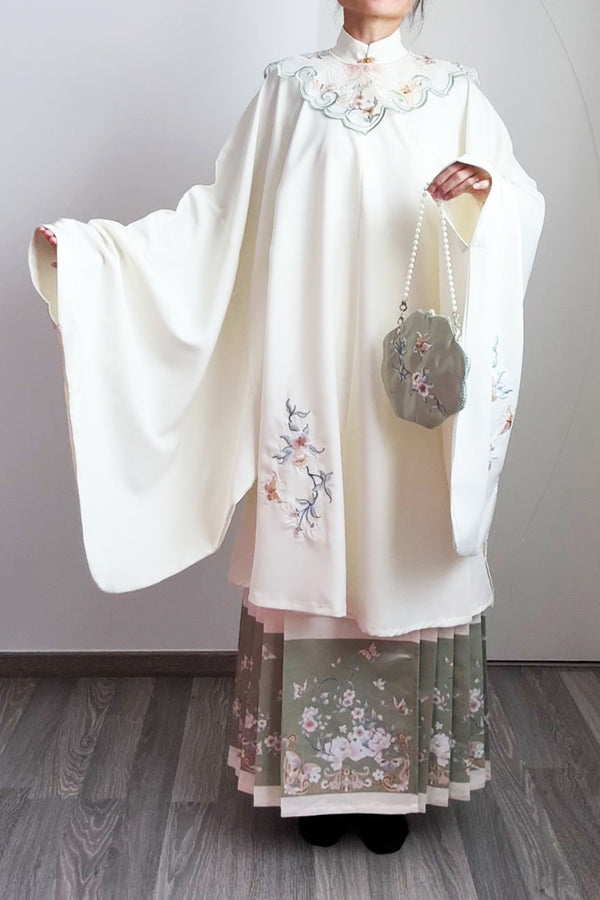
the traditional costume (of a people)
Chinatown, the Chinese quarter (lit. “the street of the people of the Tang”)
the compatriot (lit. “of the same womb”)
the descendants of the dragon (the Chinese)
multi-ethnic
the China of the origins (an ancient, literary name)
the descendants of Yandi and Huangdi (the Chinese)
ethnic style (fashion, music)
the people of all ethnic groups (official language)
The peoples of China
the Zhuang (the largest of the minorities, in Guangxi)
the Hui (Chinese-speaking Muslims)
the Manchus
the Uyghurs
the Miao (Hmong)
the Tibetans
the Mongols (of China)
the Dai (related to the Thais, in Yunnan)
the Koreans of China
the Yi
the Tujia
the Bai (around Dali, in Yunnan)
the Yao
the Kazakhs (of China)
the Naxi (around Lijiang)
the Li (Hainan Island)
Festivals and customs of the peoples of China
the yurt
halal (清真餐厅, the Muslim restaurant)
the Water-Splashing Festival (the Dai New Year)
the welcome scarf (Tibetans, Mongols)
the Torch Festival (of the Yi)
the Naadam (Mongolian festival: wrestling, archery, horse racing)
butter tea (Tibetan)
the Dongba script (pictograms of the Naxi)
Speaking a language
language
to speak, to say
to speak (a language); to tell
to be able to speak (a language)
to talk, to speak
to understand (what you hear)
not to understand (what you hear)
the foreign language
to translate; the translator, the interpreter
the accent
fluently; fluent
correct, without an accent; the standard
authentic, like a native
bilingual
to exchange, to communicate
to express
to understand, to speak, to read, to write (the four skills)
sign language
interpreting (oral)
written translation
conversation (in a textbook)
linguistics
Chinese and its varieties
Chinese (the language of the Han)
Chinese (above all written)
standard Mandarin (lit. “the common language”)
the dialect, the regional language
Cantonese (everyday name)
Cantonese
Shanghainese
Sichuanese, the speech of Sichuan
the speech of the Northeast
Minnan (southern Fujian, Taiwan)
Classical Chinese
Hakka
Wu (the Shanghai and Zhejiang region)
the northern dialects (the Mandarin group)
the “language of the mandarins” (that of the imperial officials)
the national language (name of Mandarin before 1949, and in Taiwan)
Chinese (the name used in Singapore and Malaysia)
the spoken language (modern written Chinese, as opposed to the classical)
the accent of one's native place
the local patois
the Beijing accent
The languages of the world
English
French
German
Japanese
Korean (not to be confused with 汉语 Hànyǔ)
Spanish
English (above all written)
Russian
Italian
Arabic
Portuguese
French (above all written)
Thai
Vietnamese
the foreign language (above all written)
a foreign language (colloquial)
Latin
Esperanto (lit. “the language of the world”)
Peoples and languages in idioms and proverbs
to talk utter nonsense
ten li away the accent changes, a hundred li away the customs change
each land shapes its own people
from every corner of the country (lit. “the five lakes and the four seas”)
from all over, from the four corners of the country
within the four seas, all men are brothers
a mixed accent, neither northern nor southern
talking at cross purposes (lit. “the hen talking to the duck”)
clear diction and a full voice
to be a good talker, to have the gift of the gab
to speak incoherently
to seek common ground while respecting differences
Peoples and languages in everyday words
the joke; to laugh at
the dialogue
“the book of Heaven”: an incomprehensible text (it's all Greek to me!)
to talk nonsense
the voice message; pronunciation
the tone (of a sentence)
the topic of conversation
pointless words; “obviously!”
a real man (汉: the man, the guy)
the brave man, the hero
pidgin, a jargon mixed with English (from the name of a canal in Shanghai)
everyday language, plain speech
the verbal tic, the pet phrase
Example sentences
Do you speak Chinese? A little.
I speak French and English.
China has fifty-six ethnic groups.
Please speak more slowly, I don't understand.
How do you say this word in Chinese?
He speaks fluent Chinese.
The Han are the largest ethnic group in China.
I don't understand Cantonese.
The Cantonese speak Cantonese, and Mandarin too.
He speaks with a strong Sichuan accent.
Yunnan is the province with the most ethnic minorities.
Every year in April, the Dai celebrate the Water-Splashing Festival.
She works as a translator for a company.
His French is flawless: he doesn't have the slightest accent.
This book is really all Greek to me.
In the past, Mongolian herders lived in yurts.
Don't talk nonsense, I never said that.
In Chinatown, many old people speak only Cantonese.
Ten li away the accent changes, a hundred li away the customs change: China has a host of dialects.
One speaks Minnan, the other Shanghainese: they are talking completely at cross purposes.
The students in our class come from every corner of the country.
A Tibetan friend gave me a welcome scarf.
The Dongba script of the Naxi is a pictographic script.
As soon as he opens his mouth, you can hear the Beijing accent.
Within the four seas, all men are brothers.