 English
 French
 Arabic
 Bulgarian
 Czech
Czech
 Danish
 German
 Greek
Greek
 Spanish
 Finnish
 Hungarian
 Indonesian
 Italian
 Hebrew
 Japanese
 Korean
 Dutch
Dutch
 Polish
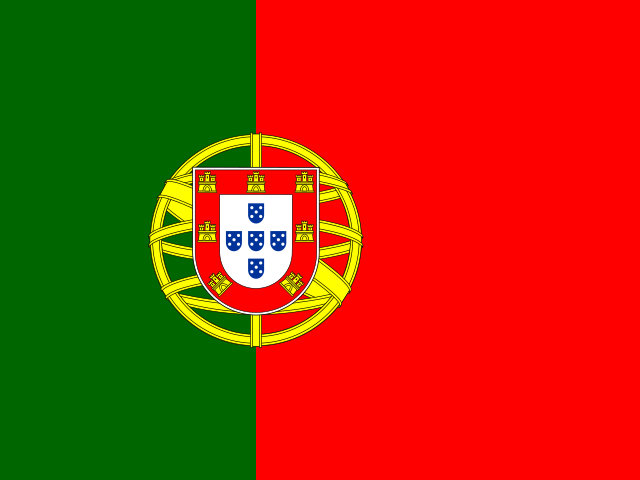 Portuguese, International
 Romanian
 Russian
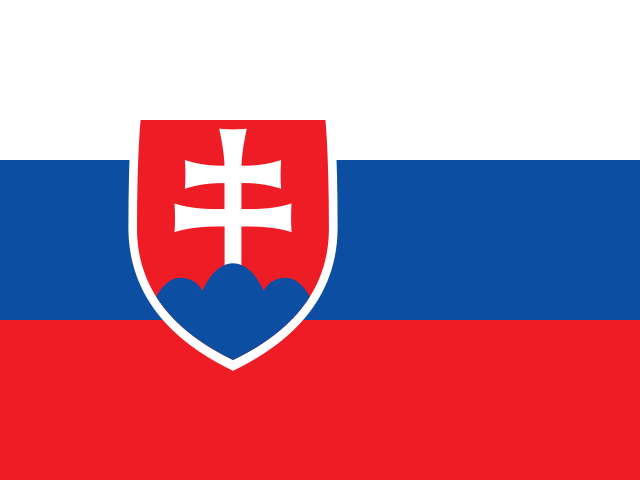 Slovak
 Swedish
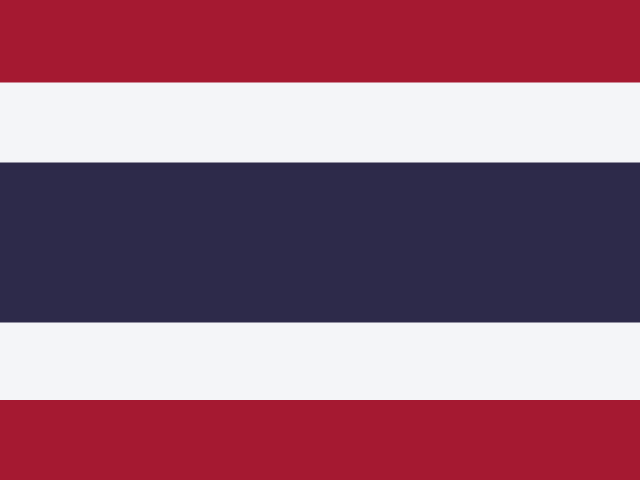 Thai
Thai
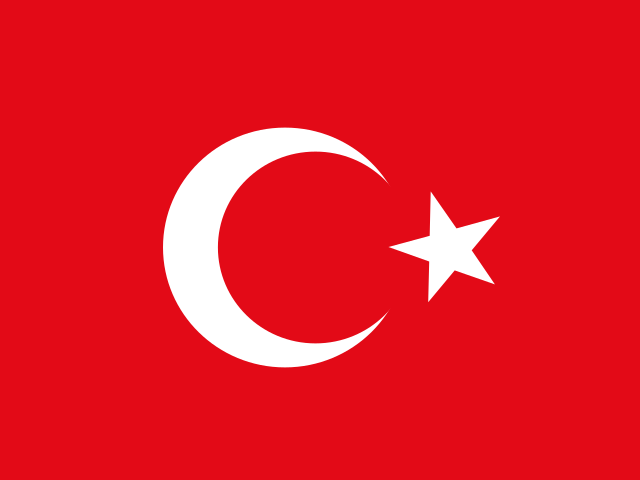 Turkish
 Ukrainian
Learning Chinese: writing the characters of Unit 6
Please choose how the character breakdown is displayed:
家 : family, home, household
Stroke order:
Graphic components: 宀 roof; 豕 pig, hog.
Etymology: 家 is a pictogram composed of 宀 "roof" and of 豕 "pig", symbolizing the ancient dwellings where the inhabitants lived above the domestic animals.
Stroke order:
Graphic components: 宀 roof; 豕 pig, hog.
Etymology: 家 is a pictogram composed of 宀 "roof" and of 豕 "pig", symbolizing the ancient dwellings where the inhabitants lived above the domestic animals.
Character evolution:
| Oracle bone | Bronze | Seal script | Clerical script | Regular script |
|---|---|---|---|---|
| 家 | 家 | 家 | 家 | 家 |
口 : (mouth) / classifier for the number of family members
Stroke order:
Graphic components: 口.
Etymology: 口 is a primitive pictogram representing an open mouth.
Stroke order:
Graphic components: 口.
Etymology: 口 is a primitive pictogram representing an open mouth.
Character evolution:
| Oracle bone | Bronze | Seal script | Clerical script | Regular script |
|---|---|---|---|---|
| 口 | 口 | 口 | 口 | 口 |
有 : to have
Stroke order:
Graphic components: 𠂇 left hand; 月 moon/meat.
Etymology: 有 is an ancient ideogram representing a hand holding a piece of meat. This character combines 𠂇 (variant of 手, hand) and 月 (originally 肉, meat), symbolizing material possession. It evolved to express existence (There is...) and abstract possession (to have). The character "meat" 肉 merged with the moon 月 when it is a component.
Stroke order:
Graphic components: 𠂇 left hand; 月 moon/meat.
Etymology: 有 is an ancient ideogram representing a hand holding a piece of meat. This character combines 𠂇 (variant of 手, hand) and 月 (originally 肉, meat), symbolizing material possession. It evolved to express existence (There is...) and abstract possession (to have). The character "meat" 肉 merged with the moon 月 when it is a component.
Character evolution:
| Bronze | Seal script | Clerical script | Regular script |
|---|---|---|---|
| 有 | 有 | 有 | 有 |
Vocabulary:
- 没有 : to not have
个 : classifier for people / general classifier (see the grammar)
Stroke order:
Graphic components: 人 person.
Etymology: 个 is an old simplified form of the character 個. Originally, it represented a bamboo section or an individual unit. This character is mainly used as a universal classifier.
Stroke order:
Graphic components: 人 person.
Etymology: 个 is an old simplified form of the character 個. Originally, it represented a bamboo section or an individual unit. This character is mainly used as a universal classifier.
Character evolution:
| Bronze | Seal script | Clerical script | Regular script |
|---|---|---|---|
| 个 | 个 | 个 | 个 |
两 : the number "two" for time and quantities (see the grammar)
Stroke order:
Graphic components: 一 one; 冂 inverted box; 人 human.
Etymology: 两 is the simplified form of 兩, originally representing a scale and later serving as a unit of measurement (50 grams).
Stroke order:
Graphic components: 一 one; 冂 inverted box; 人 human.
Etymology: 两 is the simplified form of 兩, originally representing a scale and later serving as a unit of measurement (50 grams).
Character evolution:
| Oracle bone | Bronze | Seal script | Clerical script | Regular script |
|---|---|---|---|---|
| 兩 | 两 | 两 | 两 | 两 |
和 : and
Stroke order:
Graphic components: 禾 grain; 口 mouth.
Etymology: 和 is a character composed of 禾 "grain" and of 口 , "mouth". Originally, it symbolizedharmony through the image of a grain field (禾) feeding a community (口), evolving toward concepts of peace, ofbalance and ofaccord (e.g. 和平 , "peace"; 和谐 , "harmony").
Stroke order:
Graphic components: 禾 grain; 口 mouth.
Etymology: 和 is a character composed of 禾 "grain" and of 口 , "mouth". Originally, it symbolizedharmony through the image of a grain field (禾) feeding a community (口), evolving toward concepts of peace, ofbalance and ofaccord (e.g. 和平 , "peace"; 和谐 , "harmony").
Character evolution:
| Oracle bone | Bronze | Seal script | Clerical script | Regular script |
|---|---|---|---|---|
| 禾口 | 和 | 和 | 和 | 和 |
爸 : (dad)
Stroke order:
Graphic components: 父 father; 巴 is not a graphic component, but a phonetic element (). As a component, 巴 is often referred to as the boa.
Etymology: 爸 is a character composed of 父 , "father" and of the phonetic component 巴 . Originally, it was a familiar and affectionate term for the father, combining the meaning of "paternal kinship" (父) with a sound indication (巴).
Stroke order:
Graphic components: 父 father; 巴 is not a graphic component, but a phonetic element (). As a component, 巴 is often referred to as the boa.
Etymology: 爸 is a character composed of 父 , "father" and of the phonetic component 巴 . Originally, it was a familiar and affectionate term for the father, combining the meaning of "paternal kinship" (父) with a sound indication (巴).
Character evolution:
| Oracle bone | Bronze | Seal script | Clerical script | Regular script |
|---|---|---|---|---|
| 父巴 | 爸 | 爸 | 爸 | 爸 |
妈 : (mom)
Stroke order:
Graphic components: 女 woman; 马 horse.
Etymology: 妈 is the simplified form of 媽, a phono-semantic compound composed of 女 (, "woman", semantic component) and of 馬 (, "horse", phonetic component). The character combines the idea of a female figure (mother) with the pronunciation "ma" carried by 马. It evolved to specifically designate the mother, often used affectionately.
Stroke order:
Graphic components: 女 woman; 马 horse.
Etymology: 妈 is the simplified form of 媽, a phono-semantic compound composed of 女 (, "woman", semantic component) and of 馬 (, "horse", phonetic component). The character combines the idea of a female figure (mother) with the pronunciation "ma" carried by 马. It evolved to specifically designate the mother, often used affectionately.
Character evolution:
| Oracle bone | Seal script | Clerical script | Traditional | Simplified |
|---|---|---|---|---|
| 女馬 | 妈 | 妈 | 妈 | 妈 |
Vocabulary:
- 爸爸 : dad. Note that the second loses its tone in this word.
- 妈妈 : mom. Note that the second loses its tone in this word.
子 : (son) / suffix
Stroke order:
子 is a graphic component.
Etymology: 子 is an archaic pictogram representing a swaddled newborn, with a prominent head and raised arms.
Stroke order:
子 is a graphic component.
Etymology: 子 is an archaic pictogram representing a swaddled newborn, with a prominent head and raised arms.
Character evolution:
| Oracle bone | Bronze | Seal script | Clerical script | Regular script |
|---|---|---|---|---|
| 子 | 子 | 子 | 子 | 子 |
儿 : (son) / suffix
Stroke order:
Components: 儿 is a graphic component.
Etymology: 儿 is the simplified form of the traditional character 兒. Originally, 兒 represented a child with a large head and a clearly visible fontanelle, composed of 臼 ("mortar", originally evoking the head and the fontanelle) and of 儿 (person, son). The modern simplification 儿, adopted in the 1950s, keeps only the "person, son" component (儿). Today this character means son, but also serves as a suffix in words such as 哪儿 (where?).
Phonetics: the of pinyin is pronounced like the "er" in English "her", but with the tip of the tongue curled backward.
Stroke order:
Components: 儿 is a graphic component.
Etymology: 儿 is the simplified form of the traditional character 兒. Originally, 兒 represented a child with a large head and a clearly visible fontanelle, composed of 臼 ("mortar", originally evoking the head and the fontanelle) and of 儿 (person, son). The modern simplification 儿, adopted in the 1950s, keeps only the "person, son" component (儿). Today this character means son, but also serves as a suffix in words such as 哪儿 (where?).
Character evolution:
| Oracle bone | Bronze | Seal script | Clerical script | Regular script | Simplified |
|---|---|---|---|---|---|
| 兒 | 儿 | 儿 | 儿 | 儿 | 儿 |
Vocabulary:
- 儿子 : son. Note that loses its tone in this word.
- 女儿 : daughter (in the sense of "someone's daughter").
孩 : child
Stroke order:
Graphic components: 子 child; 亥 12e earthly branch.
Etymology: 孩 is a phono-semantic compound composed of the child 子 and of the phonetic component 亥 (12e earthly branch). The character appears in classical texts to specifically designate a young laughing child.
Stroke order:
Graphic components: 子 child; 亥 12e earthly branch.
Etymology: 孩 is a phono-semantic compound composed of the child 子 and of the phonetic component 亥 (12e earthly branch). The character appears in classical texts to specifically designate a young laughing child.
Character evolution:
| Bronze | Seal script | Clerical script | Regular script |
|---|---|---|---|
| 孩 | 孩 | 孩 | 孩 |
Vocabulary:
孩子 : child. Note that loses its tone in this word.
哥 : (elder brother)
Stroke order:
Graphic components: 可 can.
Etymology: 哥 is a character composed of two 可 ("can") stacked. This phonetic duplication originally symbolized the familiar term for an elder brother, today expressed by 哥哥 . The character also embodies relationships of respect and camaraderie, as in 大哥 ("elder brother" or "respected leader").
Stroke order:
Graphic components: 可 can.
Etymology: 哥 is a character composed of two 可 ("can") stacked. This phonetic duplication originally symbolized the familiar term for an elder brother, today expressed by 哥哥 . The character also embodies relationships of respect and camaraderie, as in 大哥 ("elder brother" or "respected leader").
Character evolution:
| Oracle bone | Bronze | Seal script | Clerical script | Regular script |
|---|---|---|---|---|
| 可 | 哥 | 哥 | 哥 | 哥 |
姐 : elder sister
Stroke order:
Graphic components: 女 woman; 且 phonetic element .
Etymology: 姐 is composed of two elements: the woman radical 女 on the left, which indicates that the character is related to the feminine gender, and the phonetic part 且 , which gives an indication of the pronunciation. Originally, 且 represented a lingam 且.
Stroke order:
Graphic components: 女 woman; 且 phonetic element .
Etymology: 姐 is composed of two elements: the woman radical 女 on the left, which indicates that the character is related to the feminine gender, and the phonetic part 且 , which gives an indication of the pronunciation. Originally, 且 represented a lingam 且.
Character evolution:
| Bronze | Seal script | Clerical script | Regular script |
|---|---|---|---|
| 姐 | 姐 | 姐 | 姐 |
弟 : (younger brother)
Stroke order:
Graphic components: 弓 bow.
Etymology: 弟 is borrowed from an ancient character representing a cord wound around a post, indicating that binding posts with a cord, turn after turn, is done in an orderly way. The original meaning is "order". It was borrowed phonetically to designate the younger brother.
Stroke order:
Graphic components: 弓 bow.
Etymology: 弟 is borrowed from an ancient character representing a cord wound around a post, indicating that binding posts with a cord, turn after turn, is done in an orderly way. The original meaning is "order". It was borrowed phonetically to designate the younger brother.
Character evolution:
| Oracle bone | Bronze | Seal script | Clerical script | Regular script |
|---|---|---|---|---|
| 弟 | 弟 | 弟 | 弟 | 弟 |
妹 : (younger sister)
Stroke order:
Graphic components: 女 woman; 未 not yet.
Etymology: 妹 is a phono-semantic compound composed of 女 "woman" and of the phonetic component 未 (not yet). It specifically designates a younger sister.
Stroke order:
Graphic components: 女 woman; 未 not yet.
Etymology: 妹 is a phono-semantic compound composed of 女 "woman" and of the phonetic component 未 (not yet). It specifically designates a younger sister.
Character evolution:
| Oracle bone | Bronze | Seal script | Clerical script | Regular script |
|---|---|---|---|---|
| 妹 | 妹 | 妹 | 妹 | 妹 |
Vocabulary:
- 哥哥 : elder brother. Note that the second loses its tone in this word.
- 姐姐 : elder sister. Note that the second loses its tone in this word.
- 弟弟 : younger brother. Note that the second loses its tone in this word.
- 妹妹 : younger sister. Note that the second loses its tone in this word.
- 家人 : family members.